
Affiliate disclosure: This article contains affiliate links. If you purchase through them, we may earn a commission at no additional cost to you. As an Amazon Associate I earn from qualifying purchases.
Being a new parent can mean sorting through more advice than you can use in a day. Start with one practical task and the care instructions for your own baby. You do not need to turn every feeding, nap or shopping decision into a test of whether you are doing enough.
This guide gives you six daily checks for choosing gear, soothing, sleep, age-appropriate food, home safety and routines. You will learn what to review now, what belongs later in infancy and which questions need professional support. A caregiver checklist at the end makes the next handoff easier.

1. Give each gear purchase a specific job
Before buying, name the task an item will support. Is it for transport, sleep, feeding or cleanup? Then check the equipment you already own, its exact requirements and the space available. An attractive bundle does not establish that every piece is appropriate or compatible.
Read manuals and check current recall information for equipment, especially secondhand items. Seller descriptions and customer reviews should not replace those checks. If you cannot identify a model or find its instructions, resolve that uncertainty before relying on it.
Keep your list short enough to use. Mark essential equipment separately from optional conveniences and record exact compatibility requirements. Our newborn essentials checklist offers related shopping questions.

2. Try gentle soothing without expecting an instant result
A soothing routine is an interaction, not a guarantee. Notice what is happening and describe concerns clearly to your care team. Do not assume every cry comes from the same cause or that failing to settle quickly means you have done something wrong.
If you choose to swaddle, AAP advises stopping as soon as there are signs of trying to roll, placing the baby on their back and avoiding weighted swaddles. Swaddling does not reduce SIDS risk. Ask for a demonstration if the technique is unfamiliar and read the AAP swaddling guidance.
Ask for help when a situation is difficult to manage. A useful request might be for another adult to take over an agreed task while you contact the care team. A product advertised as soothing does not diagnose discomfort or replace feeding and health support.

3. Put the sleep setup ahead of a fixed timetable
AAP recommends back sleeping on a firm, flat surface in an appropriate crib, bassinet, portable crib or play yard. Keep loose bedding, pillows, toys and other soft objects out of the sleep space. Read the AAP safe sleep guide and the exact equipment instructions.
If a sleep pattern concerns you, keep a short note of what you observe and ask your care team about it. Do not use a generic nap chart to override feeding instructions or decide that every baby must sleep the same number of naps.
As a new parent, you can make the handoff clearer by showing another caregiver the actual sleep setup and the plan you follow. Our newborn sleep guide gives related questions to discuss.
Optional product to compare: Graco On the Go Pack ‘n Play Playard, Kaden
This play yard is an equipment example to compare with your space and needs. Follow the exact manual for the mode you use; a product name or listing alone is not a complete sleep-safety assessment. Observed On the Go Kaden playard with folding infant bassinet. Follow the exact current manual, developmental and weight limits. Manufacturer page lists bassinet up to 15 lb; other stop-use milestones also apply. Use only the supplied pad and manufacturer-approved accessories; do not add a crib mattress. Check model and date against current recall notices. The reviewed 2021 inclined-accessory recall names other playard models, not this listing; this is not a blanket recall-free claim.

View Graco On the Go Pack ‘n Play Playard, Kaden on Amazon
4. Keep solid-food ideas separate from newborn feeding
CDC guidance recommends introducing foods other than breast milk or infant formula at about 6 months, with developmental readiness considered. Introducing solids before 4 months is not recommended. A newborn should not be given purees simply because they appear in a general baby-tips article.
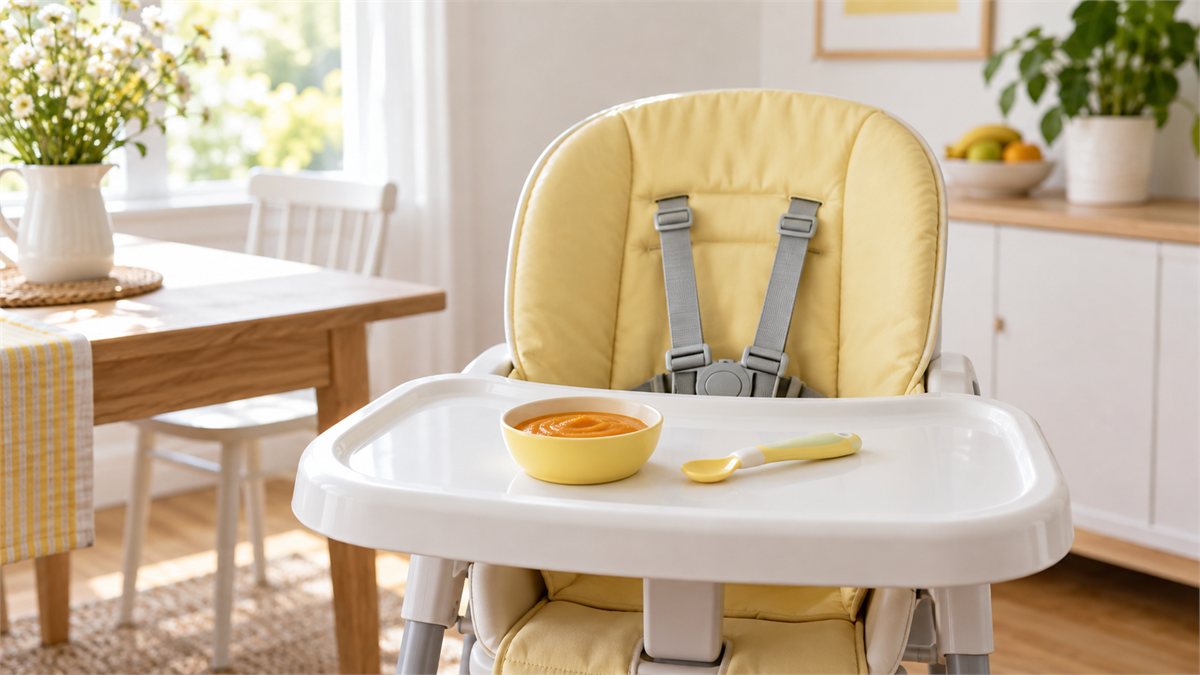
Readiness signs include head and neck control, sitting alone or with support, and swallowing food rather than pushing it back out. Discuss your baby’s circumstances with the care team. For ready babies, mashed or pureed foods can be prepared at a suitable texture, and an adult should watch while they eat.
Simple food ideas include cooked vegetables mashed until smooth or soft fruit prepared appropriately. The texture and preparation matter more than a promise that one recipe is gentle on every baby’s stomach. Avoid fixed preparation times that assume every food and cooking method is the same.
Read the CDC introducing solids guide for readiness, food preparation and allergy considerations. Our starting-solids article offers further questions to discuss before changing the feeding plan.
5. Review the home by task and location
Walk through the places where care happens: the sleep space, changing area, feeding spot and route out of the home. Ask what an adult needs to reach and what should be inaccessible to a child. Keep medicine, cleaning products and small loose items organized appropriately.
Do not treat a monitor or another accessory as a substitute for supervision. Review the instructions for safety equipment and ask a qualified professional about uncertainty. A checklist should help you identify questions, not promise that a home can become risk-free.
For an outing, use the instructions for your actual transport equipment. Compatibility, fit and installation are specific checks, not assumptions based on a convenient travel-system label. Save the manual where another caregiver can access it.
6. Build a routine another caregiver can understand
A routine can describe the next task without imposing a rigid day. Start with the care and feeding instructions you have been given, then decide where supplies belong and how information will be shared.
At a handoff, say what just happened, what is needed next and which question needs follow-up. Include contact details for the care team. If another adult helps with household work, give them a concrete task such as laundry or meal preparation.
A new parent does not have to organize everything alone. Keep the next appointment and your main questions visible. A usable plan is one that people can explain and adapt with appropriate advice, rather than a chart that looks impressive but conflicts with your baby’s needs.
New parent questions
Should I buy more gear if a routine is difficult?
First identify the specific difficulty. Check instructions and ask for support where needed. Optional equipment may make a task convenient, but it cannot establish the cause of a care problem.
Are homemade purees suitable for a newborn?
No. Solid foods belong later, around 6 months with developmental readiness considered. Follow your baby’s feeding plan and ask your care team before introducing solids.
What should I share with another caregiver?
Share the actual care instructions, the next task, where supplies are kept and the contact route for concerns. Show unfamiliar equipment before expecting someone to use it.
Your new parent daily checklist
Review one care task, check the supplies already available, record one question and explain the next step to the person helping. Keep shopping decisions separate from medical concerns and match food and equipment to the baby’s actual stage.
Optional product to compare: OXO Tot Silicone Spoons, 2 Pack, Blossom and Opal
For a baby who is ready for solids, compare this feeding-tool example with the approach you have discussed with your care team. A spoon does not establish developmental readiness or remove the need for supervision. The listing describes flexible silicone, a rounded handle, a deep spoon head and an anti-roll design. Match any utensil to your baby’s abilities and supervise every meal. A spoon purchase is optional and does not establish readiness for solids.

View OXO Tot Silicone Spoons, 2 Pack, Blossom and Opal on Amazon
Sources checked October 8, 2026: AAP swaddling and safe sleep guidance, plus CDC introducing solids guidance, linked above. This educational article has not received an individual clinician review.