


Affiliate disclosure: This article contains affiliate links. If you purchase through them, we may earn a commission at no additional cost to you. As an Amazon Associate I earn from qualifying purchases.
Baby Amazon accessories can make a registry feel overwhelming. Start with what you need to do each day, then compare the features that support that task. A long shopping list is not a requirement for caring for your baby.
These six checks cover everyday gear, clothing, feeding, play, travel and nursery storage. You will learn what to compare, what can wait and how two product examples fit a care routine. The final check helps you organize supplies without turning storage into a place to change or sleep your baby.
This guide compares listing details rather than reporting hands-on tests. Check current variants, instructions, dimensions and recalls. Customer ratings and shopping badges do not establish that an item is suitable for your child.
1. Match baby Amazon accessories to a daily task
Before adding a gadget, name the job it will do. A caddy may keep diaper supplies together, while a bag may help with outings. An existing basket or bag may serve the same purpose if it stores supplies appropriately.
Compare cleaning instructions and actual dimensions. Think about where the item will live, who will use it and whether it needs charging, replacement parts or a subscription. A compact feature can be useful, but only if the item fits your space and routine.
- List the care task before choosing the product.
- Check what you already own.
- Confirm size, cleaning and setup needs.
- Read instructions for equipment the accessory attaches to.
For a carrier, check the exact minimum size and the permitted positions. Keep the baby’s airway visible and unobstructed, and follow the carrier manual. A hands-free claim does not make a carrier suitable for every activity.
Our baby accessories guide offers another way to group a registry by the tasks you expect to do.
2. Choose clothing and sleep supplies separately
For everyday clothes, compare the size chart, fastenings and washing directions. A zipper may suit your preference for changes, but check how it opens rather than assuming every sleeper has a two-way zip.
Start with a manageable number of outfits. Babies grow at different rates, and a labeled age is not a fit guarantee. Inspect clothing and accessories for loose parts and follow the care label.
Sleep supplies need a separate check. The AAP safe-sleep guide recommends back sleeping on a firm, flat surface in an appropriate crib, bassinet, portable crib or play yard. Use the correct mattress and fitted sheet, keeping loose blankets, pillows and toys out.
A soft or breathable fabric description does not establish safe sleep use. Avoid weighted sleep products. If you swaddle, stop when the baby shows signs of trying to roll and follow the full safety guidance. Choose clothing for the conditions without overheating.
3. Compare feeding accessories by stage and cleaning needs
Feeding supplies should match how your baby feeds now. Bottle shape, nipple flow and the number of parts can affect your routine. A large set may be less useful than trying a small number before buying more.
The CDC formula guide explains that formula does not need warming. Do not microwave it. Measure water and powder according to the instructions rather than relying on an accessory to correct preparation.
CDC guidance says to use prepared formula within two hours of preparation and within one hour after feeding starts. If not using it within two hours, refrigerate immediately and use within 24 hours. Discard feeding leftovers. Read the full guide for additional precautions for young, premature or immunocompromised babies.
For first foods, choose utensils that suit readiness and keep eating supervised. A suction bowl is an optional convenience, not a promise of mess-free meals. Our starting solids guide discusses this later stage.
Product to compare: Dr. Brown’s Options+ Narrow Baby Bottles, 4 oz, 4 Pack
The observed Dr. Brown’s Options+ narrow set includes four 4-ounce bottles and vent components. Compare nipple flow, assembly and the extra pieces to wash with your feeding routine. The vent design is a listing feature, not a guarantee of gas relief or better sleep. Seek help for persistent feeding difficulties rather than relying on a bottle change alone.


Check current details on Amazon
Technique also matters. Read our paced bottle-feeding guide alongside the bottle instructions.
4. Select toys and teethers for abilities and age guidance
Play items should suit what your child can do. The CPSC toy-safety guide recommends following packaging age guidance and matching toys to the child’s interests and abilities. Keep small parts and small balls away from children under three, and remove packaging after opening.
Check cleaning directions for the exact toy. Do not assume every item can be boiled, put in a dishwasher or treated with the same cleaner. Inspect for damage and follow replacement guidance.
Compare a teether’s construction, permitted use and care instructions. Do not tie it around a baby’s neck or assume freezing is allowed. Buying a sensory toy does not establish that it will speed development.
Simple interaction can still be enjoyable: talk, sing and offer age-appropriate supervised play. A shopping list should support those moments, not promise milestones on a schedule.
5. Check travel fit and the limits of safety gadgets
The NHTSA car-seat guide recommends choosing by age and size, checking vehicle fit and following both the seat and vehicle manuals. Babies under one should always ride rear-facing. Continue rear-facing as the child grows within the manufacturer’s limits.
Confirm the exact combination of stroller, seat and adapter. A travel-system name does not establish compatibility with equipment you already own. Register a seat for recall notices and seek installation help from a certified technician when needed.
For gates and other home equipment, check the location, mounting method and installation instructions. A monitor’s video or alerts do not replace supervision. The linked AAP guidance says home cardiorespiratory monitors should not be used to reduce SIDS risk.
Compare power requirements, app access and what happens when a monitor loses connection. A feature list does not make a device a medical assessment tool.
6. Organize nursery supplies without creating a care surface
Storage should keep supplies accessible to adults while keeping unsuitable items out of a child’s reach. Compare bins and shelves by size, stability and any required anchoring instructions. Follow manufacturer directions for furniture installation.
A storage bin is not a changing surface. Use a suitable changing setup according to its instructions, keep supplies within adult reach and stay with the baby. Do not improvise a changing spot on a basket or leave a baby unattended on an elevated surface.
Keep decorative pillows, plush toys and loose blankets outside an infant sleep space. Nursery style can be expressed elsewhere without placing extra objects in the crib.
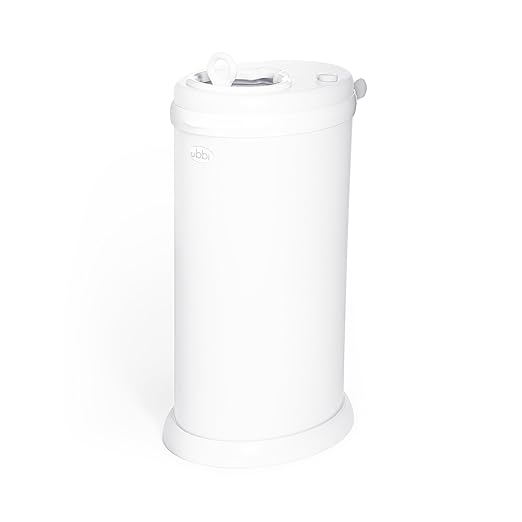
Product to compare: Ubbi Stainless Steel Diaper Pail, White
The observed white Ubbi diaper pail has a steel body, sliding lid with a lock and compatibility with standard trash bags. Compare its dimensions and emptying routine with your space. A lid lock is not a childproof guarantee, and odor-control features do not mean it will be odor-free. Follow its cleaning instructions and keep bags away from children.
Check current details on Amazon
Frequently asked questions
Which baby Amazon accessories should I buy first?
Prioritize suitable sleep, feeding, diapering and travel arrangements for your baby’s stage. Add optional organizers or gadgets only when you can identify a task they will help with.
Do high ratings mean a baby product is safe?
No. Ratings describe shopper experiences. Review the exact product’s instructions, age and size guidance, recalls and compatibility before deciding whether it suits your child.
Do anti-colic bottles guarantee gas relief?
No. A bottle’s vent design is a feature rather than a treatment guarantee. Persistent feeding discomfort deserves an assessment. Compare flow, technique and cleaning needs instead of buying a promised cure.
Does every baby need a bottle warmer?
No. Formula does not need warming, according to the CDC. If you choose to warm a feed, follow preparation guidance and equipment instructions, and do not use a microwave.
Can nursery storage double as a changing station?
A storage bin or basket is not a changing surface. Use an appropriate setup according to its instructions, keep an adult with the baby and store supplies separately.
Before buying, write one sentence describing the job each item will do. If you cannot name the task or verify suitability, leave it off the registry for now. That final check makes baby Amazon accessories easier to compare without assuming more products mean better care.