
Affiliate disclosure: This article contains affiliate links. If you purchase through them, we may earn a commission at no additional cost to you. As an Amazon Associate I earn from qualifying purchases.
Your baby’s first year planning starts with learning about the child in front of you. Care needs, feeding skills and familiar routines change over these months, and you do not need to turn every day into a milestone photo shoot.
These four guides cover cues and crying, feeding, safer sleep, and development and memories. You will get practical questions, two optional supply comparisons and ideas for recording ordinary moments. The final guide explains how to celebrate progress while still acting on concerns.
Use the baby’s clinician for individual care instructions and health questions. If something seems unusual, describe what you are noticing rather than relying on a general schedule to decide everything is fine.
1. Your baby’s first year care begins with observing cues
Sounds, movements and expressions can help you notice patterns, but one movement is not a reliable diagnosis. Look at the situation, the last feed and the baby’s usual behaviour. Wiggling fingers or blinking does not establish a specific need on its own.
The CDC hunger and fullness guide describes early hunger signs such as hands moving toward the mouth and turning toward the breast or bottle. Closing the mouth or turning away can indicate fullness. Crying is often a later hunger sign, and a baby does not need to finish a bottle simply because milk remains.
The AAP guide to responding to cries explains that cries can overlap and differ between babies. Check the immediate care needs and seek medical advice for persistent or unusual crying or when you think the baby is ill.
| What you notice | Useful context to record |
|---|---|
| Changes in feeding | When they began and how the baby usually feeds |
| Different crying | Timing, associated symptoms and what you tried |
| Changes in sleep or activity | What differs from the usual pattern |
| A new concern | Specific observations and your questions |
If you feel overwhelmed by crying, put the baby in a safe place such as their crib and ask another suitable adult for help. Never shake or hit a baby. A difficult crying spell does not establish that you are a bad parent.

2. Follow feeding needs as skills change
Ask for help with nursing positioning, milk transfer, bottle flow or preparation when you need it. A calm room may be comfortable, but it does not guarantee effective feeding or an unbreakable bond. Follow the baby’s individual plan rather than insisting on a universal feeding technique.
Our paced bottle-feeding guide offers questions to consider with your care team. No method or bottle promises to prevent all gulping, fussiness or gas.
The CDC solids guide recommends introducing foods at about six months, with developmental readiness. Relevant signs include head and neck control, supported or independent sitting, opening the mouth for food and swallowing rather than pushing it out.
Choose textures that suit developing feeding abilities and supervise eating. Ask about allergenic foods, especially if the child has severe eczema or an egg allergy before introducing peanut. A month-by-month table cannot decide the right texture for every child.
| Stage | Question to clarify |
|---|---|
| Milk feeding | Is the baby feeding effectively under their current plan? |
| Considering solids | Are the relevant readiness signs present? |
| Developing food skills | Which textures and preparation suit the child’s abilities? |
| Concern about a reaction or feeding difficulty | What professional advice or urgent care is needed? |
Optional care item: OXO Tot Silicone Spoons, 2 Pack, Blossom and Opal
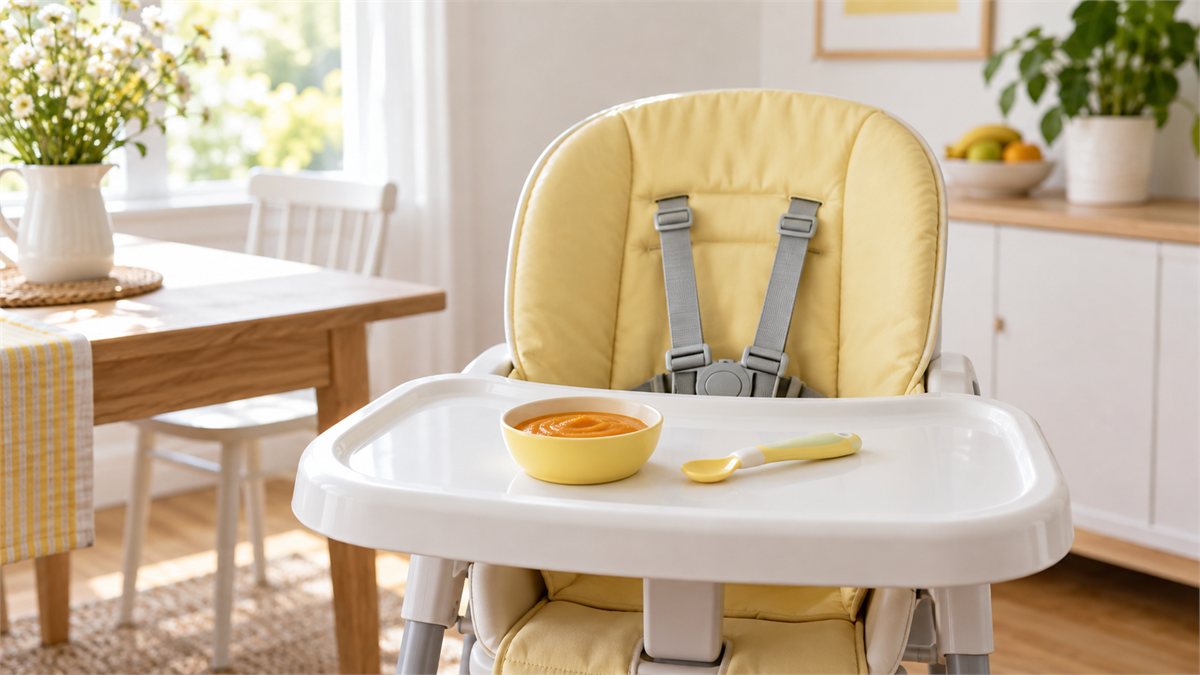
For the later stage when the baby is ready for solids, the observed OXO listing offers a two-pack of flexible silicone spoons. Compare the design and current care instructions with the utensils you already own. Use with supervision; buying a spoon does not establish readiness or make a food texture safe. It is not a newborn feeding requirement.

Check current details on Amazon
Our starting solids guide gives further planning questions. Keep the feeding plan suited to the child rather than treating messy meals as proof that the approach is working.
3. Build a flexible routine around safer sleep
The AAP safe-sleep guide recommends placing infants on their backs on a firm, flat surface in suitable sleep equipment. Use the correct mattress and fitted sheet. Keep stuffed animals, pillows and loose bedding out.
Swaddling is optional, does not prevent SIDS and should stop when the baby shows signs of trying to roll. Avoid weighted sleep products. A favourite toy belongs to supervised awake activity, not the infant sleep space.
A familiar sequence such as a feed, quiet conversation and settling may suit your family. Keep it flexible around actual care needs. Dim lights or a bath cannot promise uninterrupted sleep, and a fixed bedtime is not appropriate for every baby.
Do not shorten naps simply to force a longer night. Ask the clinician about feeding and sleep concerns, and arrange suitable help so caregivers can rest. Our newborn routine guide is another starting point for that discussion.

4. Record milestones and memories without overlooking concerns
CDC milestone resources cover how children play, learn, speak, act and move. Their checklists are useful observations, not a substitute for developmental screening. If the child is missing milestones, has lost skills or you have another concern, talk with the doctor and ask about screening rather than waiting for a reassuring photo moment.
Keep memories separate from an assessment of development. A journal can hold a funny expression, a familiar song or an ordinary afternoon. You do not need every memory to document a new skill.
| Idea | What to save |
|---|---|
| A short note | Something you noticed today |
| A family photograph | A supervised moment in an ordinary setting |
| A reading memory | The title of a book you shared |
| A private journal | Questions, feelings and a small update |
Use suitable, supervised activities rather than elaborate props or obstacle courses. A conversation, song or age-appropriate book can be enough. Keep craft supplies and small objects out of reach, and consider privacy before sharing photographs online.
Choose a memory idea that is enjoyable rather than another obligation. The goal is to notice your child while keeping care and developmental questions open.
Supplementary video from the original article
The original video embed is retained as supplementary material. This updated guide is not a transcript or confirmation of the video’s contents.
Frequently asked questions about baby’s first year care
What should I expect in the first weeks?
Expect to learn the baby’s care needs while adjusting your own plans. Clarify feeding instructions, follow-up care and whom to contact with concerns.
How should I track milestones?
Use an appropriate checklist and share observations with the clinician. Do not dismiss a missed milestone or loss of skills simply because children develop differently.
How can I help my baby sleep?
Start with a suitable sleep setup and a manageable routine. No routine guarantees longer sleep, and parental stress should not be blamed for a baby’s waking.
How can I make room for my own needs?
Ask for practical help with care or household tasks. A short break may be welcome, but it cannot replace necessary sleep or professional support.
Which activities can we enjoy together?
Try a suitable book, song or supervised play based on the baby’s abilities and interests. You do not need to promise a developmental benefit for every activity.
When should solids begin?
Usually at about six months with developmental readiness. Use the CDC resource and the child’s care team rather than a fixed early-food schedule.
How can I capture memories?
Keep a note or a few photographs when it is enjoyable. Protect privacy and avoid putting a photo opportunity ahead of care or safety.
What is useful advice for new parents?
Ask questions, accept appropriate help and revise plans when needs change. You do not have to handle every uncertainty alone.
Optional feeding cleanup supplies
Optional care item: Yoofoss Muslin Burp Cloths, White, 10 Pack, 20 by 10 inches
The observed Yoofoss listing includes ten cotton muslin burp cloths, each 20 by 10 inches. Compare the quantity with supplies already available, follow washing directions and inspect for wear. Use them for supervised feeding cleanup and keep loose cloths out of the infant sleep space. They are not a treatment for reflux, gas or crying.

Check current details on Amazon
Use baby’s first year planning to support daily care and notice changes. Enjoy ordinary moments, and take health or developmental concerns to the relevant professional.