
Affiliate disclosure: This article contains affiliate links. If you purchase through them, we may earn a commission at no additional cost to you. As an Amazon Associate I earn from qualifying purchases.
Age-by-age kitchen tasks can help you plan a cooking activity, but a birthday does not establish readiness for a sharp tool or a hot appliance. Start with the child in front of you and the supervision you can provide.
Here you will get four starting stages, a readiness checklist and questions for choosing the next task. You will also find food-safety reminders and one optional adult accessory for a break after cooking. Begin with the safety checks today; they apply before any age-based suggestion.
Source inspiration for age-by-age kitchen tasks
The original feature credited Jane Marsh and linked to her Natural Parent Magazine article. Jane is associated with Environment.co. Its framework groups activities into toddler, preschool, early school and older-child stages. This updated companion retains that progression while adding independent planning checks. Read the source for its full discussion.
Safety checks before choosing a task
Choose an activity you can actively supervise. Set out the equipment, check the workspace and agree on how the child should ask for help. If you cannot give the task appropriate attention now, choose another time.
The U.S. Fire Administration cooking guide advises staying with cooking and switching off the burner if you leave the kitchen. Turn pot handles toward the back of the stove. Keep younger children’s work away from heat, and review the complete fire-safety guidance before a cooking session.
The FDA food-handling guide recommends washing hands and surfaces, keeping raw animal foods separate, cooking to appropriate temperatures and refrigerating promptly. Hands need soap and water for at least 20 seconds before and after food handling. Use the full instructions for the food you prepare.
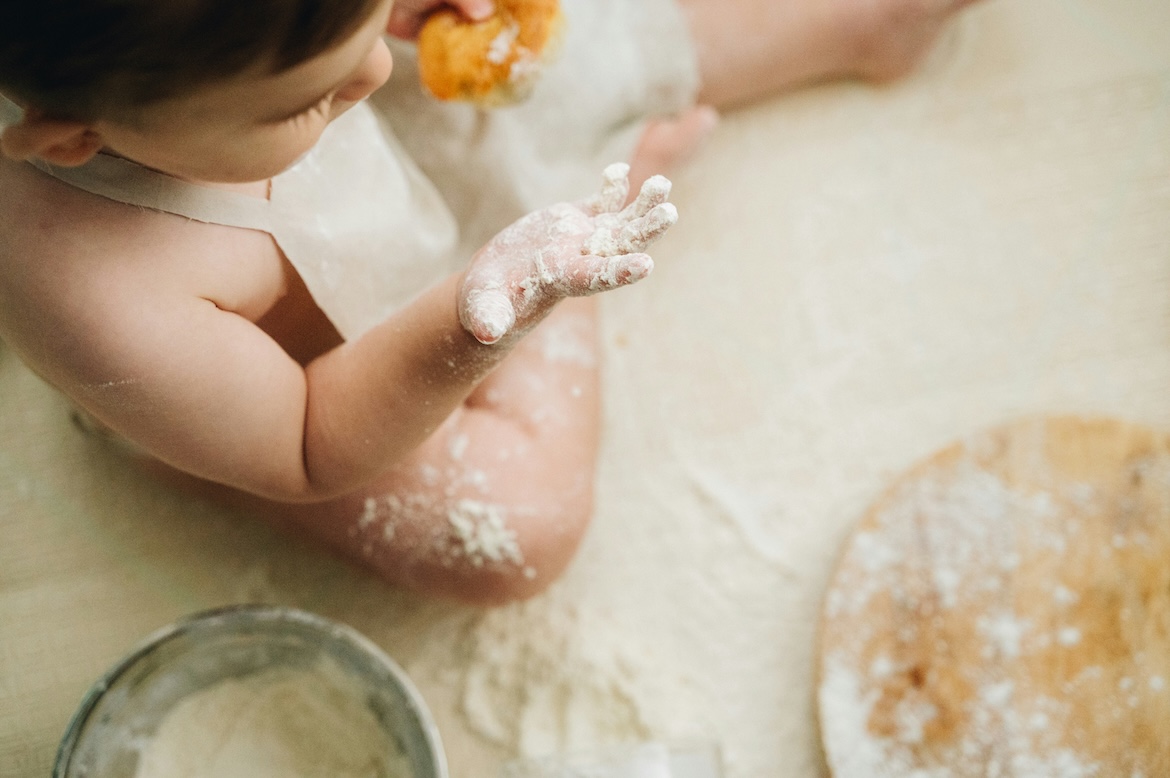
Raw dough is not a tasting or play activity: The FDA flour guidance explains that raw flour and raw eggs can contain harmful germs. Do not taste uncooked flour, dough or batter, and do not give children raw dough as craft clay. Follow cooking and baking instructions.
1. Ages 2 to 3: choose one simple cold-food activity
For a toddler, begin by demonstrating a single action with suitable tools and ingredients. A supervised cold mixing activity may be an option when the child can participate appropriately. The adult controls the ingredients, setup and cleanup.
Keep the instruction short. You might show how to move a utensil slowly inside a bowl, then decide whether a turn is suitable. Watching you prepare food is also participation. There is no requirement to give the child a tool just to complete an age-group checklist.
Plan a natural stopping point before starting. If the child becomes tired, distracted or starts mouthing unsuitable items, end or change the activity. Finishing a recipe is less important than choosing an appropriate experience.
2. Ages 4 to 5: build a small sequence
When a child can follow the demonstrated task, consider adding a short sequence: find the measuring cup, check the amount with you and return the tool to its place. Select ingredients and utensils around the individual child’s abilities.
You can do the preparation and ask the child to help count or identify items. A recipe is a useful prompt for conversation, not a test of whether they can keep up. Give them time to ask what comes next.
Keep raw-ingredient handling separate from tasting. Explain which items are ready to eat and which belong in an adult-managed preparation process. Avoid turning raw dough into a play activity.
3. Ages 6 to 8: practice planning before adding tools
Read the recipe together and let the child explain the order in their own words. Ask what equipment is needed and where the finished food will go. You may find that planning is a useful next task even when the adult still performs the cutting or cooking.
A grater, peeler or knife requires an individual decision and appropriate instruction. Do not treat this age range as permission to use one. First consider the child’s attention, ability to follow directions and whether you can supervise closely.
Choose a familiar action if the recipe also introduces a new ingredient or technique. Changing one part at a time makes it easier to notice which question needs explanation.
4. Ages 9 to 12 and older: expand responsibility selectively
An older child may be ready to organize more of a familiar recipe, but heat and sharp tools still need an appropriate supervision plan. Agree on what the child will do and what remains the adult’s responsibility before starting.
Practice finding instructions and asking for help, rather than rewarding silent guessing. Being able to explain why a step matters is useful evidence for your next decision. Age-by-age kitchen tasks should remain flexible when a child needs more practice.
Let the child help review the session afterward. Ask which part felt clear, which was difficult and what they would like to repeat. Choose the next task from that conversation rather than moving automatically to a more complex recipe.
A readiness checklist to use at every stage
| Check | Question for the adult |
|---|---|
| Instructions | Can the child explain or follow this particular step? |
| Equipment | Have I assessed the exact tool and task? |
| Attention | Can I provide the supervision needed now? |
| Food handling | Are preparation, tasting and cleanup clearly separated? |
| Stopping | Do we know when to pause and ask for help? |
For wider household planning, see our family routine tips and toddler morning routine guide. Keep a cooking activity separate from the pressure to finish a busy meal on time.
Frequently asked questions
Do age-by-age kitchen tasks mean every child is ready at that age?
No. These stages organize ideas. Decide according to the child’s abilities, the exact task and the supervision available.
Can older children automatically use the stove?
No. Assess the individual situation and agree on appropriate instruction and supervision before any heat-related task.
Should a child taste the batter they mixed?
Do not offer raw dough or batter for tasting. Follow the FDA guidance linked above and the recipe’s cooking instructions.
What if the child only wants to watch?
Watching, asking questions and talking about the sequence can be worthwhile participation. A tool-based activity is optional.
Optional adult accessory for a break afterward
Contigo AUTOSEAL Cortland Water Bottle, Monaco, 24 oz
The observed Contigo Cortland bottle is a 24 oz adult water bottle with an AUTOSEAL lid. Its listing describes a wide opening and top-rack dishwasher cleaning. Compare the care instructions with your routine. This is an optional adult drink accessory, not a child’s training cup, infant feeding bottle or cooking tool. No performance has been independently tested here.

Check current details on Amazon
Use these age-by-age kitchen tasks to choose one appropriate activity, explain it clearly and review it together afterward. Increase responsibility according to demonstrated readiness, with safety checks in place from the start.