


Affiliate disclosure: This article contains affiliate links. If you purchase through them, we may earn a commission at no additional cost to you. As an Amazon Associate I earn from qualifying purchases.
A difficult moment with a newborn baby does not always need another product or a complicated routine. Sometimes the useful next step is to describe the problem clearly, review the instructions you already have and ask the right person for help.
This page keeps the original seven-tip video and adds a separate set of seven care checks. You will find practical ways to organize feeding questions, burping, diaper changes, sleep, cleanup, support and follow-up. Start with the task in front of you rather than trying to fix everything at once.
For illness concerns, contact your baby’s care team. AAP advises calling the pediatrician immediately when a baby 3 months or younger has a rectal temperature of 100.4°F (38°C) or higher. See the AAP fever guide. Follow urgent instructions instead of waiting for a routine tip or a shopping purchase to solve the concern.
Watch the original newborn baby tips video

Watch the original seven-tip video on YouTube. The written checks below are separate iBabyMama editorial guidance, not a transcript or a reconstruction of the creator’s seven tips.
1. Make the feeding question specific
If a feed is difficult, note what happens rather than assigning a cause immediately. Say when the difficulty occurs, what you observe and whether it has changed. Bring those details to your care team or a qualified feeding professional.
Use the plan given for your individual baby. A general video should not decide feed timing or the amount your baby needs. If equipment is involved, check its instructions and assembly before assuming that buying another version is the answer.
2. Keep a burping pause gentle
Burping does not need to become a contest to produce a sound. AAP notes that no baby burps every time and that some breastfed babies swallow little air. Ask for help if feeding discomfort persists rather than treating every cry as gas.
Have cleanup supplies ready so you can focus on secure handling. If you are unsure how to support your baby during a pause, ask a qualified professional to demonstrate. Our newborn burping article provides related questions and links to guidance.
3. Put changing supplies within the adult’s reach
Before starting a change, gather the supplies you actually use. Keep a spare outfit available and decide where used items will go. Do not leave your baby unattended to fetch something that could have been prepared first.
If another caregiver helps, show them the setup. A short explanation of where things belong can prevent confusion during the next change. Check current product labels and care directions rather than assuming every item advertised for babies will suit yours.
Optional practical item: Yoofoss Muslin Burp Cloths, White, 10 Pack, 20 by 10 inches
For supervised cleanup, compare the size and washing requirements of reusable cloths. This example can support an ordinary task; it does not treat spit-up, gas or a feeding problem. Observed White ten-pack, 20 by 10 inches, listed as 100% cotton muslin. Listing calls it organic; certification not independently verified, so do not make certified-organic claims. Follow washing instructions and inspect for wear. For supervised cleanup and burping only; keep loose cloths out of infant sleep spaces. No claim of preventing choking, reflux or spit-up.


View Yoofoss Muslin Burp Cloths, White, 10 Pack, 20 by 10 inches on Amazon
4. Check the newborn baby’s sleep space first
AAP recommends placing babies on their backs for sleep on a firm, flat surface, with loose bedding and soft objects kept out of the sleep area. Read the AAP safe sleep guide before adding accessories to a crib or bassinet.
Keep a settling routine separate from a promise of longer sleep. Review your care team’s feeding instructions and the exact sleep equipment manual. Our newborn sleep guide offers more context for that conversation.
5. Prepare for cleanup before the next task
Think through the sequence: what will you reach for, what will become dirty and where will clean supplies stay? A small, clear arrangement can be easier to maintain than several overlapping accessories.
For unfamiliar tasks, ask someone qualified to show you rather than improvising from a brief clip. Read the instructions that came with equipment and save any question you cannot answer confidently. A household shortcut should not override a care instruction.
6. Ask for one concrete piece of help
Choose a request that fits the next few hours: prepare a meal, wash used clothes, collect supplies or take over an agreed household job. Name the task rather than asking someone to guess what would help.
If the person will provide baby care, explain the instructions you are following and the contact route for questions. A helpful handoff includes what has just happened, what is needed next and which concern still needs follow-up.
7. Turn recurring struggles into a care conversation
Keep a short note when the same difficulty returns. Separate what you observed from what you think caused it. You can then ask a focused question instead of arriving with a collection of contradictory online explanations.
Save your clinic’s routine and out-of-hours contact details. Ask which changes need prompt advice and what to do if you cannot reach the usual contact. Caring for a newborn baby is easier to coordinate when everyone knows where questions belong.
Questions about newborn baby struggles
Does this page reproduce the video’s seven tips?
No. The video is preserved, while the seven written checks are separate editorial guidance. They should not be attributed to the creator as a transcript.
Will buying these products solve a feeding or sleep problem?
No. The products are optional cleanup and household examples. A persistent care concern needs appropriate support, not a guarantee from a product description.
What should I write down before asking for help?
Note what you observed, when it happened, what changed and your main question. Include any specific instructions your care team gave you.
Your next newborn baby care step
Choose one task to organize and one question to clarify. Keep your baby’s care instructions first, explain the plan to anyone helping and use optional supplies only where they make an everyday job easier.
Optional practical item: Ubbi Stainless Steel Diaper Pail, White
For the changing area, compare a diaper pail with the waste routine you already use. It is a convenience item, not an infant health intervention or a reason to change your care plan. The observed listing describes a stainless steel pail, standard trash-bag compatibility, sliding lid and childproof lock. It is an optional disposal convenience. Odor-control wording is a manufacturer claim, not independently tested performance. Keep bags inaccessible to children.
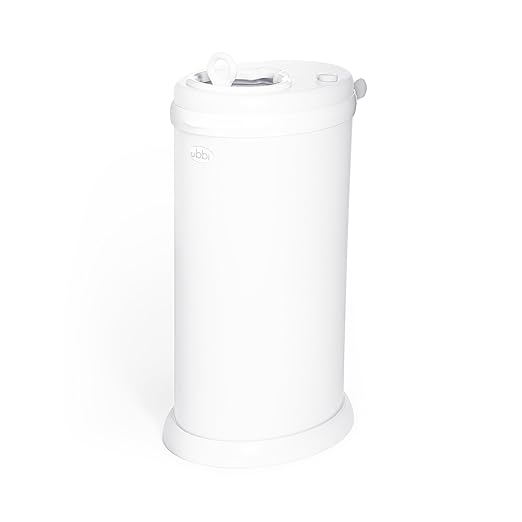
View Ubbi Stainless Steel Diaper Pail, White on Amazon
Sources checked October 8, 2026: AAP fever and safe sleep guidance linked above, and AAP burping guidance. This page has not received an individual clinician review.