

Affiliate disclosure: This article contains affiliate links. If you purchase through them, we may earn a commission at no additional cost to you. As an Amazon Associate I earn from qualifying purchases.


Gassy baby relief starts with understanding your baby’s feeding comfort, not choosing a product first. This guide covers five gentle comfort steps, warning signs that need medical advice, and five vented bottles to compare by nipple flow, cleaning and design. No bottle guarantees relief from gas or colic.
Table of Contents
Understanding a gassy baby
A baby who squirms through a feed or pulls their knees toward their tummy can leave you wondering whether something is wrong, or whether you need to buy a different bottle. Gas is one possibility, but crying alone does not tell you the cause. Start by looking at feeding comfort and your baby's overall health, then choose any feeding gear around a specific need.
This guide explains practical steps, when to call your pediatrician, and how five vented bottles differ. It is an editorial comparison based on published information, not a hands-on test or a diagnosis. No bottle is a guaranteed treatment for gas or colic.
- Gentle feeding-comfort steps
- When to call your pediatrician
- Five bottle designs to consider
- Answers to common gas and colic questions
Gassy baby relief: the quick answer
For gassy baby relief in a baby who otherwise seems well, start with feeding support rather than a shopping list. The American Academy of Pediatrics suggests burping, checking bottle flow, gentle bicycle-leg movements and supervised tummy time as approaches that may help. Ask your pediatrician about persistent discomfort or medicine. AAP: Gas Relief for Babies
Keep these gassy baby relief priorities in view:
- Notice when discomfort happens and how your baby is feeding.
- Choose a nipple flow your baby handles comfortably.
- Treat “anti-colic” as a product design description, not a promise.
- Seek medical advice when crying comes with concerning symptoms.
Why babies can seem gassy
Babies can swallow air during feeding or crying. Fussiness, wriggling and drawing up the legs can accompany tummy discomfort, but these signs also occur for other reasons. Reflux, constipation and milk-protein allergy are among the possibilities a clinician may consider; parents cannot reliably distinguish them from gas by watching one crying spell. AAP: Abdominal Pain in Infants
Instead of counting every fart, keep a short note of feeds, crying episodes, stools and wet diapers. Describe what you observe to your pediatrician: whether your baby settles between episodes, feeds normally and seems alert. A useful symptom record is more helpful than assuming every unsettled evening needs a new remedy.
A gentle feeding-comfort routine
-
Check the feed itself
Offer a calm feeding opportunity when you notice hunger cues. Support your baby’s head and body. If feeds look rushed, milk spills or your baby repeatedly pulls away, ask your pediatrician or a feeding professional to assess the latch and nipple flow rather than automatically moving to a faster nipple. For breastfeeding concerns, a lactation professional can help assess positioning and latch.
-
Pause for a burp
Try a burping break when your baby appears uncomfortable, then resume feeding if they still show hunger cues. Support their head and use gentle pats; do not force a burp. Burping may help with swallowed air, but it is not a test that confirms the cause of crying.
-
Try gentle movement while awake
With your baby on their back, gently move their legs in a bicycle motion. Stop if they resist or appear distressed. You can also try a light tummy rub. These are comfort measures, not a reason to ignore continuing pain.
-
Keep tummy time separate from sleep
Offer short tummy-time sessions only while your baby is awake and closely supervised. If they become sleepy, move them to their safe sleep space. Put babies on their backs for naps and nighttime sleep; tummy-down positioning is not a gas-relief sleep strategy. AAP: Back to Sleep, Tummy to Play
-
Get help with a pattern that persists
Bring ongoing feeding discomfort to your pediatrician. Discuss formula changes or restrictive dietary changes before making them, and prepare formula exactly as directed. Do not dilute a feed or substitute a home remedy because your baby seems windy.
When gas should not be your working assumption
Contact your baby’s clinician promptly for poor feeding, poor weight gain, repeated forceful vomiting, blood in the stool, unusual sleepiness or signs of dehydration. Severe symptoms or a baby who seems seriously ill need urgent care. These signs deserve assessment rather than another bottle experiment. AAP: Abdominal Pain in Infants
For a baby 3 months old or younger, a rectal temperature of 100.4°F (38°C) or higher warrants an immediate call to the pediatrician, even without other symptoms. AAP: Fever and Your Baby
Five bottle designs to compare for gassy baby relief
If bottle-feeding seems to involve swallowed air, a vented bottle is one design to discuss or try. Compare the vent, nipple flow and cleaning routine. These picks describe design differences; they are not rankings of medical effectiveness. No bottle is a guaranteed treatment for gas or colic.
The links below lead to the specific Amazon listings reviewed. Check the current offer, pack contents and seller before purchasing; prices and availability may change.
Read our Amazon affiliate disclosure for more about how product links support iBabyMama. The comparisons below explain design differences; they do not rank bottles by medical effectiveness.
Quick picks by bottle design


Compare the selected bottle listings
|
Internal vent
Dr. Brown’s Options+
|
VS |
AirFree insert
Philips Avent AirFree
|
|---|---|---|
|
Internal vent
|
Vent design |
AirFree insert
|
|
4 oz · 4-pack
|
Capacity and pack |
4 oz · 4-pack
|
|
Level 1 slow flow
|
Included nipple |
Flow 1 slow flow
|
|
Clean internal vent parts
|
Cleaning consideration |
Clean AirFree insert
|
| View on Amazon | View on Amazon |
Dr. Brown’s Options+: This clear 4 oz four-pack uses Dr. Brown’s internal vent system and Level 1 slow-flow nipples. Consider it if you want to compare an internal-vent design and can maintain the extra parts. Match nipple flow to your baby’s feeding comfort; the anti-colic label does not guarantee relief.
- Internal vent system
- Four 4 oz bottles
- Level 1 slow-flow nipples
- Extra vent components to clean
- A multipack is a larger trial purchase
Philips Avent AirFree: The selected set contains four 4 oz bottles with AirFree vents and Flow 1 nipples. Philips describes the insert as helping keep the nipple full of milk. Compare this approach if it suits your feeding routine, and follow the bottle’s assembly and positioning instructions.
- One-piece AirFree insert
- Four 4 oz bottles
- Flow 1 slow-flow nipples
- Insert orientation and compatible parts matter
- This Anti-colic line differs from Avent Natural
MAM Easy Start: This four-pack contains MAM 5 oz Easy Start Anti-Colic+ bottles with slow-flow nipples. Its vented base offers a different design from an internal wand. The manufacturer describes a self-sterilizing option; follow the exact model instructions rather than improvising a microwave routine.
- Vented-base design
- Four 5 oz bottles
- Manufacturer self-sterilizing option
- Removable base and seal require correct assembly
- Nipple fit is individual
Tommee Tippee Advanced: The selected two-pack contains 5 oz Advanced Anti-Colic bottles for 0+ months with slow-flow nipples. Its vented wand is a separate air-management design to compare. Check every component during cleaning and assembly, and use the manufacturer’s instructions for its self-sterilizing feature.
- Two-bottle pack
- Slow-flow nipples included
- Vented wand design
- Wand adds an assembly and cleaning step
- Use parts compatible with the Advanced line
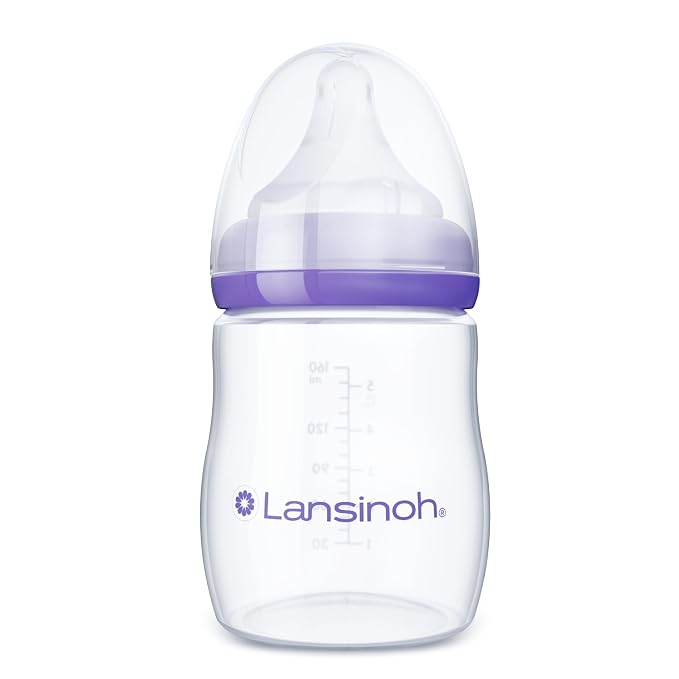
Lansinoh NaturalWave: This single Lansinoh 5 oz bottle includes a Size S slow-flow nipple. Its air-ventilation system is built into the nipple, and the listing describes three cleaning pieces excluding the cap. A single bottle offers a smaller trial purchase; confirm the nipple’s stated age guidance and your baby’s actual feeding comfort.
- Single-bottle trial option
- Three pieces excluding cap
- Size S slow-flow nipple included
- Listing specifies nipple guidance of 1 to 3 months
- A simple design still may not suit every latch
How we approached this comparison
When comparing products for gassy baby relief, check the exact bottle size, pack quantity and nipple supplied. A familiar brand name may cover several models with different parts. Start with the feeding issue you want to address, then weigh the daily work of washing, drying and assembling the vent system.
For this gassy baby relief guide, we reviewed manufacturer descriptions to compare bottle designs and pediatric guidance to keep product discussion in context. We did not test these bottles with babies or measure changes in gas, crying or sleep. We have not assigned star ratings or repeated marketing percentages as clinical guarantees.
Gassy baby relief: gas drops, gripe water and formula changes
For gassy baby relief, there is no single best product for every infant. Evidence for simethicone’s benefit is limited, and it has not been shown to treat colic reliably. Discuss medicine with your pediatrician; this article does not supply a dosing schedule. AAP: Gas Relief for Babies
The NHS also advises that anti-colic drops, herbal remedies and probiotic supplements are not recommended treatments for colic because evidence of benefit is lacking. Keep ordinary feeds going and seek advice if the crying worries you. NHS: Colic
For breastfeeding families, gas alone is not a reason to remove a long list of foods. If a particular food seems consistently associated with distress, discuss the pattern with a clinician. A broad elimination diet can leave the feeding parent with too few choices. Formula changes likewise deserve an individual discussion rather than a “best formula for everyone” recommendation.
Common questions about infant gas
How do you relieve a gassy baby?
Try a calm feed, a burping break and gentle bicycle-leg movements while your baby is awake. Review bottle flow or breastfeeding latch if feeds seem difficult. Supervised tummy time belongs to awake play only; babies should sleep on their backs. Persistent discomfort warrants a pediatrician’s assessment rather than repeated product changes.
How to tell if baby is too gassy?
Passing gas alone does not show that something is wrong. Look at the whole pattern: feeding, growth, alertness, stools, wet diapers and whether your baby settles between episodes. Poor feeding, vomiting, blood in the stool or other concerning symptoms need medical advice. Squirming and crying cannot confirm gas as the cause.
How do I know if it's colic or gas?
Gas and colic can overlap, and both can involve crying or drawn-up legs. Colic describes recurrent, prolonged crying in a baby who is otherwise healthy; it is not diagnosed by the amount of gas passed. Ask your pediatrician to assess a persistent pattern and exclude other causes. NHS: Colic
What is the best gas relief for infants?
Start with feeding support and gentle comfort measures. A bottle that suits your baby’s latch and flow may be useful if you bottle-feed, but no bottle or supplement is best for every infant. Ask your pediatrician before trying medicine. The best next step depends on the symptoms, rather than which product has the strongest “anti-colic” claim.
Gassy baby relief: a practical next step
For gassy baby relief, choose one feeding detail to observe, keep a simple record and bring ongoing concerns to your baby’s clinician. If you decide to compare bottles, focus on nipple fit, vent design and a cleaning routine you can maintain. Products can support a feeding routine; they should not replace assessment of a baby who is unwell.
Compare the daily cleaning work, too
A vent design is only one part of a bottle choice. Read the assembly instructions for the exact model and look at how many pieces you will handle after each feed. Consider whether you can identify every part, clean it as directed and keep the set together while it dries. If another caregiver prepares feeds, make sure the same instructions are available to them.
The CDC feeding-item cleaning guide recommends cleaning bottles after every feeding, taking the parts apart and allowing them to air-dry thoroughly. Its sanitizing guidance highlights babies under two months, premature babies and those with weakened immune systems. Follow the full resource and the manufacturer’s directions for methods suitable for your equipment.
Before buying a larger set, check how replacement nipples, seals or vent parts are named. Keep the model information with the instructions so you can check compatibility when a part needs replacing. A similar-looking component from another bottle line may not be the same item; confirm it with the manufacturer rather than guessing.
Your comparison can be a simple note with four columns: exact model, supplied nipple, removable parts and the care instructions you need to follow. Add any question you cannot answer from the listing. This makes the purchase decision more concrete without treating a bottle’s marketing label as a medical result.
Gassy baby relief: questions to bring to a feeding visit
Make the next conversation specific: describe when feeding becomes uncomfortable, whether milk spills or your baby pulls away, and which bottle and nipple you currently use. Ask whether a latch or flow assessment would help before buying another multipack. A short record can make your question clearer without asking you to diagnose the cause.
For separate practical reading, see our paced bottle-feeding guide, newborn burping video companion and newborn sleep guide. Keep any feeding changes consistent with your clinician’s advice and keep awake comfort measures separate from sleep positioning.
If you choose a bottle trial, compare the exact model and included nipple before ordering. The Dr. Brown’s Options+ four-pack listing is one of the five designs already compared above. It is a shopping example, not an additional recommendation or a promised treatment. Check its current offer, compatible replacement parts and cleaning instructions.