

Affiliate disclosure: This article contains affiliate links. If you purchase through them, we may earn a commission at no additional cost to you. As an Amazon Associate I earn from qualifying purchases.
Affordable babyproofing tips start with the hazards in your actual apartment. Before filling a shopping cart, look at what your child can reach, pull or climb. A small home can need careful planning even when there is little room for extra equipment.
These ten checks follow a practical route through furniture, corners, gates, cabinets, cords, play space, windows and storage. You will get questions for choosing equipment and arranging installation. The last check turns the list into an ongoing habit as your child gains new abilities.
The CPSC home childproofing guide explains that devices must be installed correctly and used consistently, and no device is completely childproof. Follow the current instructions for the exact product. Supervision remains necessary.
If renting, ask the landlord or property manager about the installation you need. A rule about wall damage is not a reason to substitute an untested adhesive arrangement for equipment that requires hardware. Obtain appropriate installation help when you are unsure.
1. Babyproofing tips begin with a floor-level check
Inspect the rooms your child uses from their level. Look for loose small objects, accessible drawers, dangling cords and furniture that could become a climbing route. Include the spaces underneath and behind furniture where dropped items can collect.
Write down the hazard and the action needed rather than guessing which gadget to buy. Some changes are simple, such as moving an object. Others require a correctly installed device or qualified help. A list helps you distinguish those jobs.
2. Anchor furniture with appropriate hardware
CPSC’s Anchor It campaign explains the risk of furniture and TV tip-overs and provides installation resources. Follow the furniture and anchor-kit instructions for the wall type and equipment involved. Do not use removable hooks, hook-and-loop strips or improvised zip-tie assemblies as substitute anchors.
Discuss installation with the property manager before buying a kit. Check what the installer needs and which furniture should be addressed. Rearranging a room or watching closely does not replace anchoring.

3. Check corners and the objects around them
CPSC includes securely attached corner and edge bumpers among childproofing devices. Compare the product’s permitted surface and attachment instructions. Inspect it afterward rather than assuming the first installation remains secure.
Skip the original article’s taped pool-noodle shortcut. Moving a sharp-edged table away from the main play route may be a useful layout change, but it does not address unrelated furniture, cord or climbing hazards. Examine the whole area.
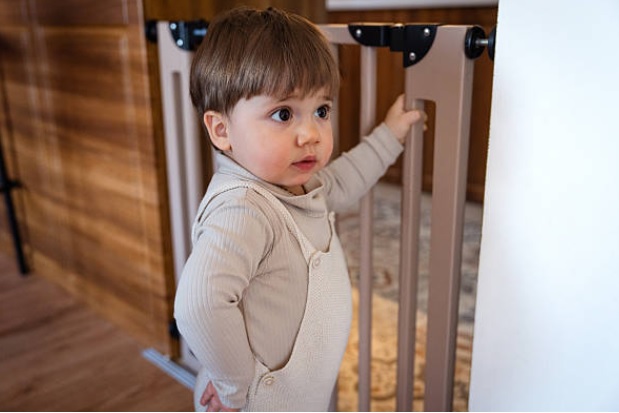
4. Match the gate to its location
CPSC says gates at the top of stairs must screw to the wall and pet gates should not be used as child safety gates. A pressure-mounted gate is not appropriate for every opening.
Measure the doorway and read the exact gate’s limits before buying. Check the wall surface, permitted extensions and installation method. Reengage the gate after use and check it as directed. Do not assume a rental-friendly description means it can serve every doorway or stairway.
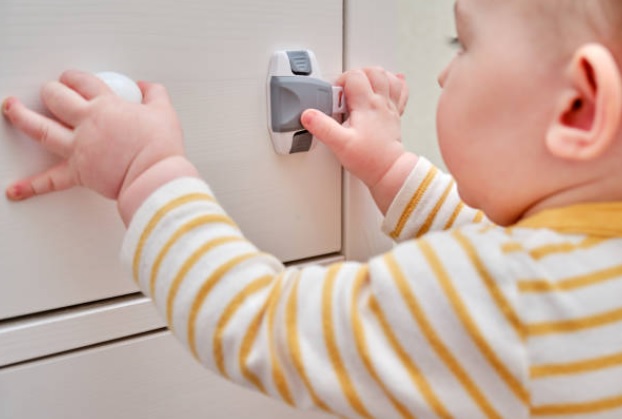
5. Lock hazardous products away
The AAP poison-prevention guide recommends keeping medicines, cleaners and other hazardous products in original packaging in locked storage, out of sight and reach. Child-resistant packaging does not mean childproof.
Hair ties around cabinet handles are not a substitute for appropriate locks. Check the latch instructions and close it after use. Review bags and visitor belongings as well as the usual cupboards; a change in routine can leave a medicine or product somewhere unexpected.
In the United States, contact Poison Control at 1-800-222-1222 for suspected poisoning. Call emergency services immediately for a child who is unconscious, not breathing or having seizures. Do not wait for symptoms before asking for appropriate help.
6. Keep electrical cords and outlets inaccessible
CPSC advises choosing outlet protection children cannot easily remove and that is too large to become a choking hazard. Follow the intended installation rather than leaving spare covers loose.
Remove the homemade plastic-container power-strip guard from the old advice. Use equipment only as instructed; an improvised enclosure can create additional problems. Ask an electrician or property manager about damaged sockets, unfamiliar wiring or a setup you cannot secure appropriately.
Check where charging cables go during use, not just where they are stored. Move the device and cord arrangement when needed, keeping it away from the child’s play and sleep areas.
7. Plan a supervised play space
Choose a space away from accessible cords, windows and furniture hazards. Check the equipment’s instructions and the child’s current abilities. A playard does not make the rest of the apartment safe or remove the need for supervision.
Measure its footprint before buying so it fits without obstructing a doorway or an emergency exit. Keep the play space separate from loose storage bags and items that could be pulled inside. Confirm the actual setup each time it is moved.
Optional comparison: Graco On the Go Pack ‘n Play Playard, Kaden
The observed Graco On the Go Kaden playard includes a folding infant bassinet. Compare the exact manual, size, developmental and weight limits for each configuration. The manufacturer lists a 15 lb bassinet limit, with other stop-use milestones also applying; main-playard rules are separate. Use only the supplied pad and manufacturer-approved accessories, not an added crib mattress. Check the actual model and manufacture date against current recalls. This is an optional supervised-play comparison, not a replacement for apartment babyproofing.


Check current details on Amazon

8. Address windows and window-covering cords separately
The CPSC’s 2026 window-safety guidance recommends suitable window guards or stops and moving furniture away from windows. Screens do not prevent falls. Renters should discuss guards with landlords, and the setup must account for emergency escape.
For blinds, use the CPSC window-covering guidance: cordless coverings are the safest option where children live or visit. Simply tying a cord high is not a complete solution to all cord hazards.
Check these issues before choosing a no-drill product. Ask what installation is required and whether it fits your window. Do not assume an adhesive lock addresses both falls and strangulation risks.
9. Store everyday supplies without creating another hazard
Small spaces can make temporary storage feel permanent. Give diapers, spare clothes and adult supplies defined places, and separate them from locked hazardous products. Keep loose bags and items with small parts inaccessible.
Check whether storage furniture creates another climbing route or needs anchoring. A high shelf is not a substitute for required locked storage. Leave walking routes and exits usable rather than filling every available gap with an organizer.
Diaper disposal is a separate household task. If you choose a pail, compare its footprint, cleaning directions and bag requirements. A lid feature does not make nearby bags, cleaners or other supplies safe for a child to access.
10. Recheck babyproofing tips as abilities change
Repeat the inspection when the child begins reaching, crawling, pulling up or climbing and whenever you move furniture. Ask other caregivers to follow the same arrangements and report a loose or damaged device.
Keep a short maintenance list: the location, the device, its instructions and the next check. This helps avoid forgotten repairs. A distraction or a snack is not a substitute for correcting a hazard.
Our baby basics guide and newborn sleep guide offer related care-planning questions.
Frequently asked questions
Can I use removable hooks instead of furniture anchors?
Do not substitute an improvised arrangement for the required anchoring hardware. Follow the manufacturer’s instructions and get installation help when needed.
Are pressure-mounted gates suitable at the top of stairs?
No. CPSC advises gates that screw to the wall at the top of stairs. Check the exact gate’s permitted location and installation.
Does a playard replace apartment babyproofing?
No. Use it according to its manual and supervise the child. Hazards elsewhere still need attention.
An optional diaper-disposal comparison
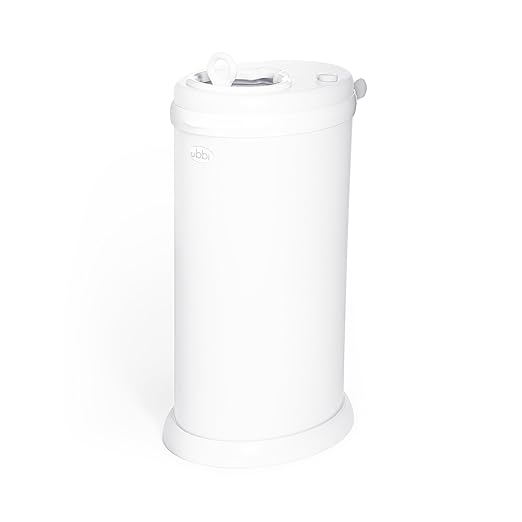
Optional comparison: Ubbi Stainless Steel Diaper Pail, White
The observed Ubbi white stainless steel diaper-pail listing describes standard trash-bag compatibility and a sliding lid with a locking feature. Compare the current instructions, footprint and cleaning requirements. This is an optional disposal convenience, not a guarantee of childproof storage or independently tested odor control. Keep bags and cleaning products inaccessible to children.
Check current details on Amazon
Use affordable babyproofing tips to prioritize the actual hazards, then confirm the required installation. Budgeting starts with a useful list and appropriate equipment, not a shortcut that changes how a safety device is meant to work.